PROLOGUE
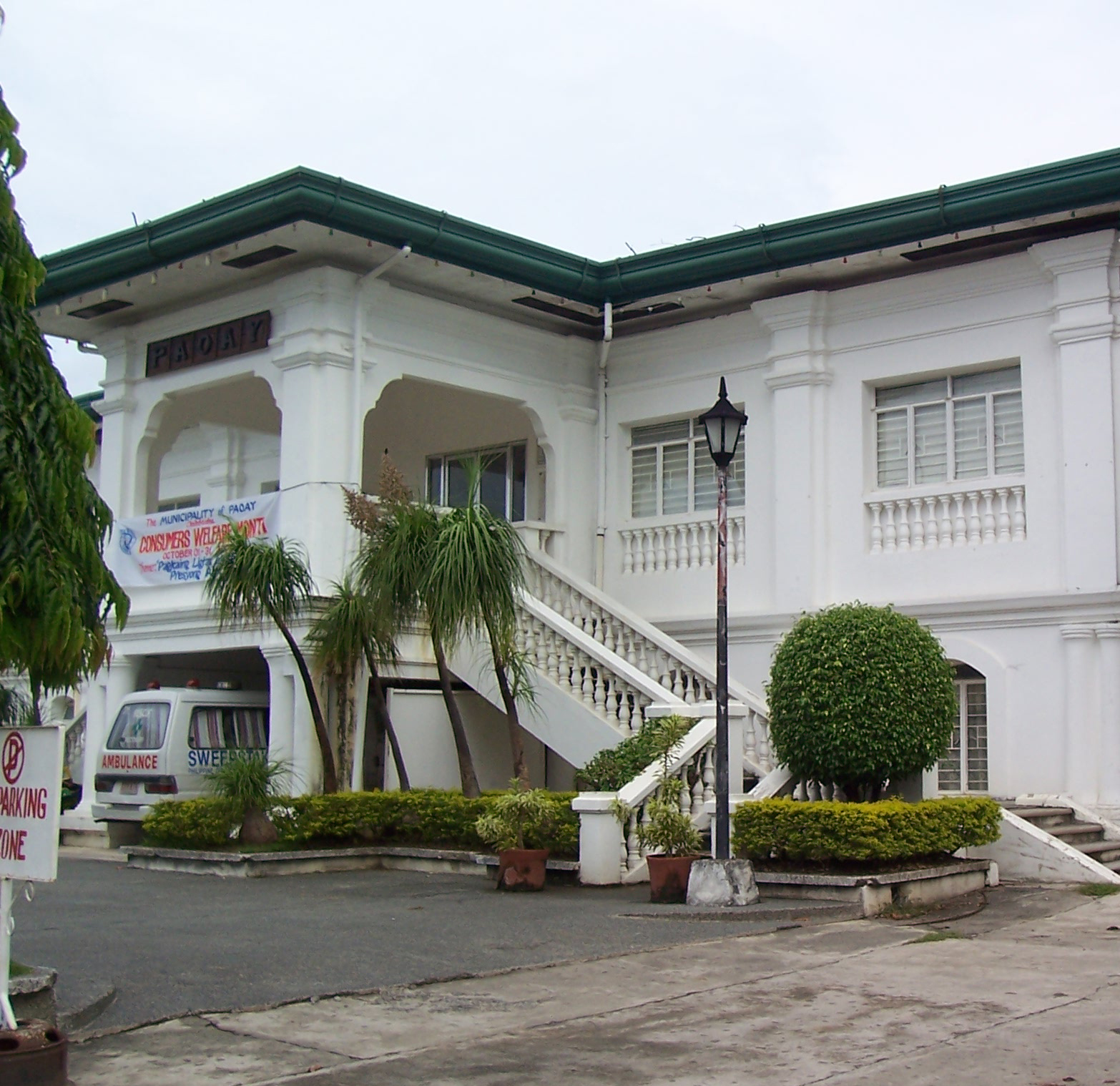
The Guiangs have special relations with the
town of Paoay, Ilocos Norte in the Philippines because their
forefathers, particularly DON MARTIN GUIANG was the founder and first
chief executive of the town. As part of this Web Site, the history
of Paoay is provided to present the holistic view of the Guiangs and
Paoay Town.
BRIEF
HISTORY OF PAOAY
Paoay is a historic town of Ilocos, Norte – a northern province of
the Philippines. Geographically, Ilocos Norte is located at the
northern tip of Luzon Island. It is a 45-minute flight or 8-hour
drive from the Philippines’ capital city of Manila. The people of
Paoay speak Ilocano dialect as their native language. English and
the national Filipino language tagalog are the medium of instruction in
school.
Paoay’s former name was Bombay. Its
site was originally located in the village of Callaguip - along
the coastal shores of the South China Sea - now a barrio of Paoay, which
is about two kilometers west of the present town proper.
Historians say: “From the date of early settlement to 1701, little could
be said about the activities of the early settlers of Paoay except that
much had been done in the clearing of the forests nearby. They
converted the forests into rice and sugar lands through the
slash-and-burn method called ‘kaingin.’ The early settlers were of
a peace-loving tribe, but their major problem was the frequent furious
incursions of Sea Rovers and Moro pirates called Tirong who looted
indiscriminately their agricultural produce and other valuables.
To protect themselves from further incursions, the folks moved towards
the nearby inland where the present town proper is now located. In
the farther western inland, there were also settlers who formed the
neighboring town of Batac. Sensing that the Bombay people had
suffered too much from the Moro raids, the people of Batac offered the
people of Bombay to live with them. But the brave and maverick
folks rejected the offer and instead they uttered "Maka-paoay kami" – an
Ilocano dialect jargon meaning they could live independently.
The settlers from Batac were offended and it was from this incident that
the name of the town came to arrive as PAOAY.”
“The first inhabitants might have come from
Bombay, India because the early name of the town was Bombay and settlers
in the early days usually named the land settlement they found after the
name of their country and place of origin. When the settlers from
Bombay arrived, they found the Indonesians already making headways in
clearing the forests. Later, the more civilized Malays came and
they drove the Indonesians away. Some were captured and held
slaves to help improve the land settlement. Those who opted to live with
the Malays stayed. The two races turned blended that it is now
hard to trace the single origin of the early settlers.”
“The last two settlers established their
permanent homes at the present site of the town proper because the
location was best suited for their personal convenience and protection
from the marauders. Hence, the site was accessible to the barrios
where they cleared for farming, namely: Burit, Monte, Paratong, Tamurong,
Tigui, Madamcao, Baramban, Lang -Ayan, Lioes, Tarangutong, Lubbot,
Currimao, Gaang, Pias, Maglaoi, Anggapang, Comcomloong, Dalayab, Puritac,
Cubol, Burayoc, Nagtriguan, Ullaleng, Buangga, Cabaruan, Tugay, Maburiac,
Liliputen, and Sacritan. Most of these barrios are now adjudicated
to the towns of Pinili, Currimao, and Batac which became municipalities
in 1920 and 1921, respectively.”
To cite the characteristics and traits of its
people, Paoayenos (called the people of Paoay) are by nature
industrious, thrifty, intrepid, daring, individualistic, peace-loving,
adventurous, hospitable, and religious people.”
FOUNDING OF PAOAY AS MUNICIPALITY
Historians say: “Spanish expedition in the
Province of Ilocos Norte began as early as 1572 when Spanish chieftain
Salcedo made his famous trip along the coast of Northern Luzon.
During the pre-Spanish period, towns were small villages, which grew
from the Barangays, and these were ruled by Minogel or Chief. At
the time of the arrival of the Spaniards, many villages were already
fairly populated,” the historians said.
The Spanish Catholic Augustinian Missionaries
Christianized the people of Paoay. They converted the villagers
into the Catholic religion. DON MARTIN GUIANG, as Christian ruler,
guided and counseled the people with nobleness, courage, and
independence. The Augustinian Missionaries formally established
the Parish Church in 1593.”
The town of Paoay was founded in 1593. Its
founder, DON MARTIN GUIANG, formally established Paoay as municipality
in 1701 through a Royal Decree issued by the Spanish hierarchy.
The Town of PAOAY was formally sanctioned as a municipality by virtue of
a Royal Decree from the King of Spain. Thus, it was formally established
in 1701 by DON MARTIN GUIANG with the executive title Capitan Bosar.
Those who succeeded Capitan Bosar Guiang (he ruled the town in 1701-1704
as Paoay’s first local executive) were Don Jose Soto, Don Tomas Cadalig,
Don Lorenzo Clemente, Don Andres Bergara, Don Cristobal de Leon, and Don
Herminigildo Diaz de la Concepcion. These six Bosars separately served
from l705 to l7l5.
The modern-day Paoay town is now extremely
different from the primitive past in terms of infrastructure projects,
cleanliness and beautification, peace and order, politics, education,
and economic progress. When one speaks of Paoay town, the name of the
most-decorated World War II soldier, the late President Ferdinand
Edralin Marcos of the Philippine Republic is recalled, simply because
the country’s erstwhile strongman built in Paoay town during the 1970s
the famous Malacanang of the North (Presidential Palace in the North).
In this executive mansion, President Marcos used to take a breather from
his hectic work and entertained many visiting world leaders, foreign
diplomats, business tycoons, and other VIPs. A stone’s throw from
the palace is the well-known Paoay Lake International Golf Course and
Country Club where the rich and famous from all over the world play and
relax after sunbathing and swimming in the nearby beach resorts
surrounded by Sahara-like sand dunes. Land travel to the town is
smooth-sailing as the road network consists of concrete pavement and
steel-concrete bridges. Hence, every guided tour by visitors is
absolutely enjoyable.
In communication aspect, Paoay Town has
direct access to the tri-media facilities – daily national newspapers,
television and radio broadcast networks, as well as internet, telephone,
postal and telegraphic facilities.