THE
GUIANG
GENERATION
Ilocano people are by nature
industrious and adventurous. These traits are possessed by
the Guiangs. In the 1800s and 1900s, several Guiang adventurers
from Paoay, Ilocos Norte sought fortune in many provinces of the
Philippines such as Isabela, Cagayan, Tarlac, Zambales, Pangasinan, Cebu
and Mindanao. It is known that a Guiang by the name of
Matias sailed south along the northwestern coast until he reached
Zambales Province. Another Guiang is known in Mindanao Island of
the Philippines and a
Chief Guiang was known to have led one of the tribes of Mindanao.
Some Guiangs immigrated to the United States mainland. In these far away
places the Guiang men folk got married to the natives and spread the
Guiang surname. These proved that all the Guiangs, who live here in the
Philippines and abroad, are related to each other by either near or
distant affinity.
In the very early 1900s, three Paoay-born
cousins, Hilario Pobre Guiang, Mauro Guiang Fuertes and Fernando
Pobre Reyno, daringly migrated to the United States of America by
boarding a US Cargo Ship that docked off the coastal town of
Currimao, Ilocos Norte, Philippines. Being young, bold, and
adventurous, the trio traveled in many parts of the United States (like
Cincinnati and Minnesota States) and Canada (like Manitoba and Quebec
Provinces). Armed with the mission and vision of rising above their compatriots back home in the Philippines, the inseparable cousins worked
through thick and thin in the wilderness of America. It is worth
remembering that during their time, equal opportunity was not practiced.
We can
imagine their courage they took to rise above others. In the
1930s, Hilario (first picture) and Mauro (second picture) studied at
University of Cincinnati in Ohio. Hilario also entered
St. Cloud State University in Minnesota
on September 8, 1931 and graduated with a 2-year course upper level
degree on March 8, 1934. Hilario and Mauro obtained
Bachelors Degree in Education in 1939. While in college, the five" four'
tall Hilario, who was fondly called “Larry” by his American classmates,
was an excellent musician. As clarinet and violin player, he joined the
University of Cincinnati Orchestra Band. He was the lone Filipino in the
all-American musical group. Hilario loved music so much that
during his retirement years in Paoay, he listened everyday and every
minute to classical music from his phonograph - a version of manual
record player invented by American Inventor
Thomas A. Edison
in 1877 - he
brought with him from the United States. Mauro, on the other hand,
kept a low profile being a work-and-study type of guy. Their cousin
Fernando Reyno did not stay long in the US. Due to extreme
homesickness, he returned to the Philippines in 1930s.
compatriots back home in the Philippines, the inseparable cousins worked
through thick and thin in the wilderness of America. It is worth
remembering that during their time, equal opportunity was not practiced.
We can
imagine their courage they took to rise above others. In the
1930s, Hilario (first picture) and Mauro (second picture) studied at
University of Cincinnati in Ohio. Hilario also entered
St. Cloud State University in Minnesota
on September 8, 1931 and graduated with a 2-year course upper level
degree on March 8, 1934. Hilario and Mauro obtained
Bachelors Degree in Education in 1939. While in college, the five" four'
tall Hilario, who was fondly called “Larry” by his American classmates,
was an excellent musician. As clarinet and violin player, he joined the
University of Cincinnati Orchestra Band. He was the lone Filipino in the
all-American musical group. Hilario loved music so much that
during his retirement years in Paoay, he listened everyday and every
minute to classical music from his phonograph - a version of manual
record player invented by American Inventor
Thomas A. Edison
in 1877 - he
brought with him from the United States. Mauro, on the other hand,
kept a low profile being a work-and-study type of guy. Their cousin
Fernando Reyno did not stay long in the US. Due to extreme
homesickness, he returned to the Philippines in 1930s.
After more than 30 years of living in
the United States, the two Ohio/Minnesota-trained educator-cousins Hilario and Mauro sailed back
home to the Philippines and reunited with their relatives in Paoay. As
the two settled for good in their hometown, both proved their mettle as
educators. Hilario, Mauro, and other professionals in Paoay town aided
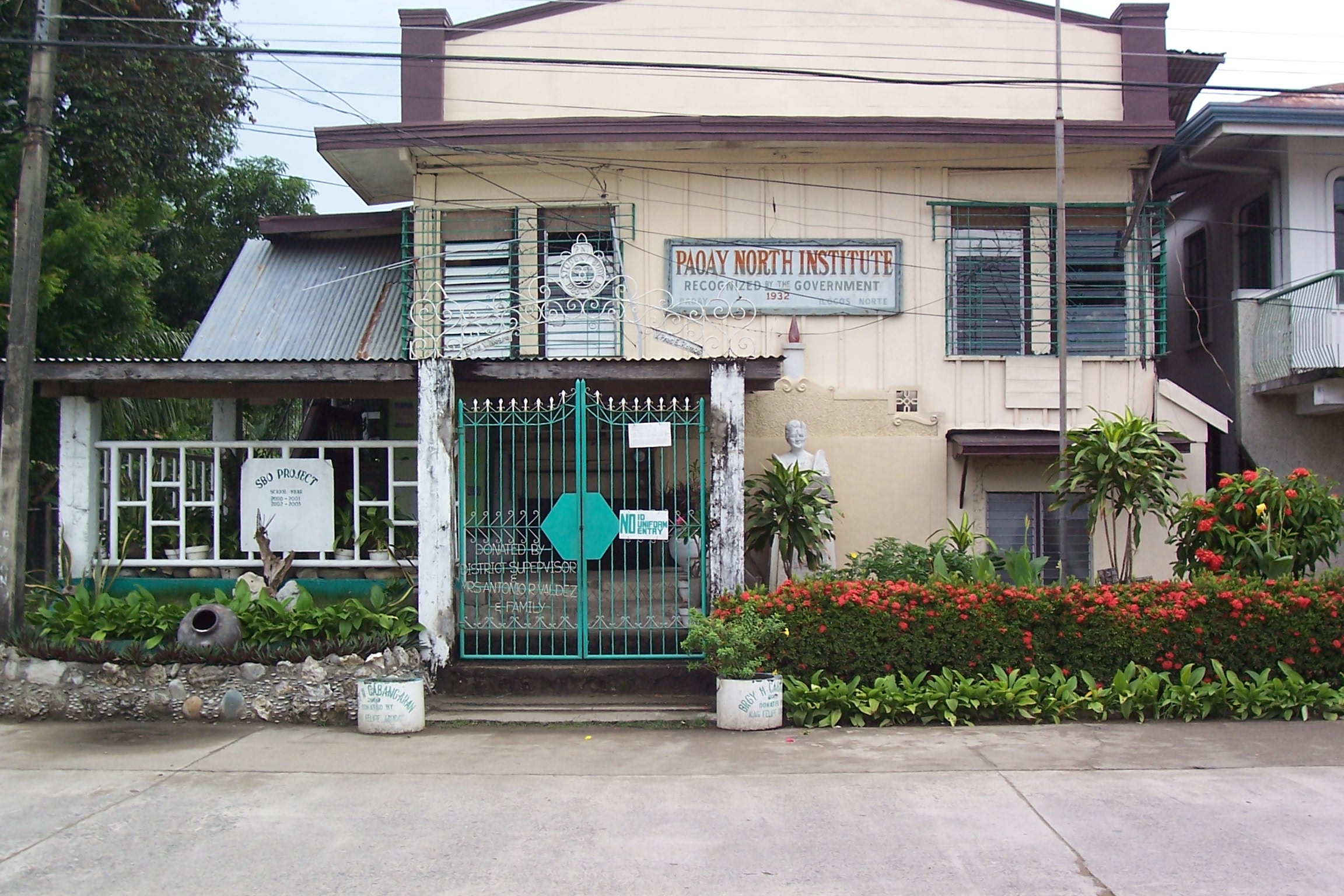
Attorney Jose Evangelista in upgrading the
Paoay North
Institute (PNI), a private high school founded in 1932 that still
exists today. Attorney Evangelista, who was said to be kin of the
Guiangs, later became an elected provincial governor of Ilocos Norte in
the 1960s.
Ohio/Minnesota-trained educator-cousins Hilario and Mauro sailed back
home to the Philippines and reunited with their relatives in Paoay. As
the two settled for good in their hometown, both proved their mettle as
educators. Hilario, Mauro, and other professionals in Paoay town aided
Attorney Jose Evangelista in upgrading the
Paoay North
Institute (PNI), a private high school founded in 1932 that still
exists today. Attorney Evangelista, who was said to be kin of the
Guiangs, later became an elected provincial governor of Ilocos Norte in
the 1960s.
Hilario also taught as pioneer mentor
at public schools in Paoay and in Roxas, Isabela. Mauro was a mainstay
at the PNI as the school librarian for many years until he retired from
the service. Hilario and Mauro remained single. During their twilight years, the duo committed
themselves to researching and documenting the genealogy of the Guiangs
starting from Don Martin Guiang, the founder of Paoay Town.
Both completed the main draft of the Guiang Family Tree before they
passed away to meet our Almighty Creator.
Today, the Guiangs live in various
parts of the Philippines, the United States, and Canada. The younger
Guiang generations now reside in California, USA and Canada while
the older Guiangs stay in Paoay, an ideal place for those who want to
enjoy peace and tranquility in their twilight years.